Canterbury Cathedral
Canterbury Cathedral is the cathedral of the archbishop of Canterbury, the spiritual leader of the Church of England and symbolic leader of the…


Canterbury Cathedral, Kent Downs National Landscape and more: the attractions, the days out and how to plan your visit.
Canterbury is a cathedral and university city on the River Stour in Kent. The medieval centre still sits inside its walls and it is small: the semi-pedestrianised high street takes about ten minutes to walk end to end, and the walking day published here links the main sights in 2.6 km. It is a major tourist centre for the county, living on roughly the trade that made it — Thomas Becket was murdered in the cathedral in 1170, the city became a centre of pilgrimage, and Chaucer wrote the Canterbury Tales about pilgrims coming here in 1387. It suits a day on foot rather than a week: nearly everything a first visit wants lies within a few hundred metres of the cathedral, and it is buildings rather than landscape.
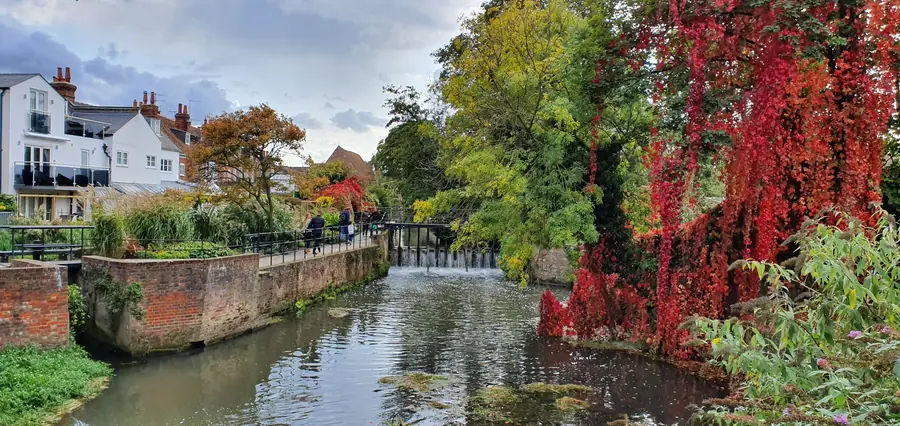
The Stour runs through the western side of the city. Westgate Gardens run along the river beneath the Westgate Towers, which a visitor in July 2026 called “the largest surviving medieval city gate in England”. A small museum inside has a rooftop viewpoint that, Wikivoyage says, looks up the high street to the cathedral. Punts and river-tour boats work this stretch.
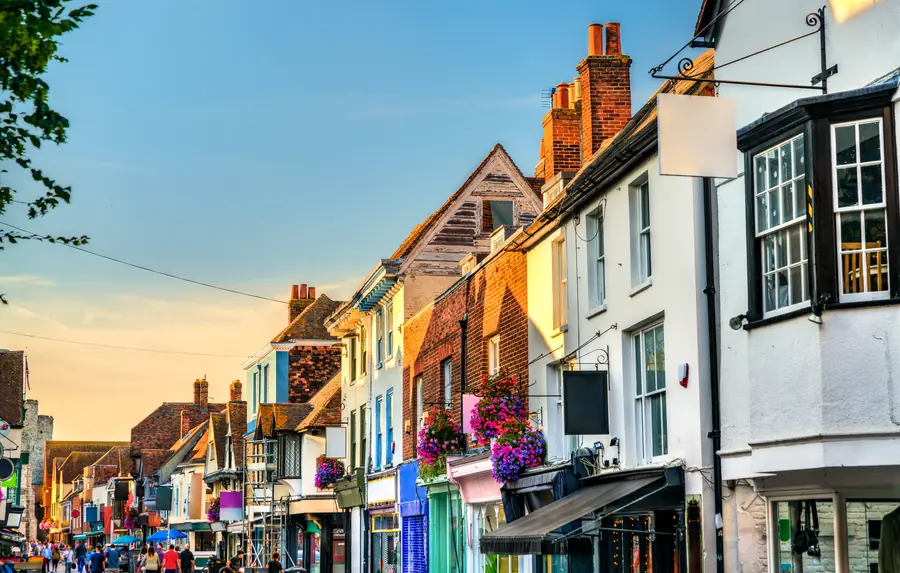
From the Westgate the high street runs south-east to the cathedral precincts, entered through Christ Church Gate. The cathedral, seat of the Archbishop of Canterbury and part of a World Heritage Site, carries 4.6 from 14,970 Google reviews. On the way, in Butchery Lane, the Roman Museum is built around a Roman pavement uncovered after the wartime bombing.
Dane John Gardens, the green corner in the south-west of the walls, was a Roman cemetery, then a motte-and-bailey castle in the 11th century, then a civic park laid out between 1790 and 1803; a visitor in August 2026 singled out “the mound that you can climb for a view and the city wall, which you can walk on top of”. The Norman castle nearby is not a stop: as of November 2023 it was closed to repair dangerous masonry.
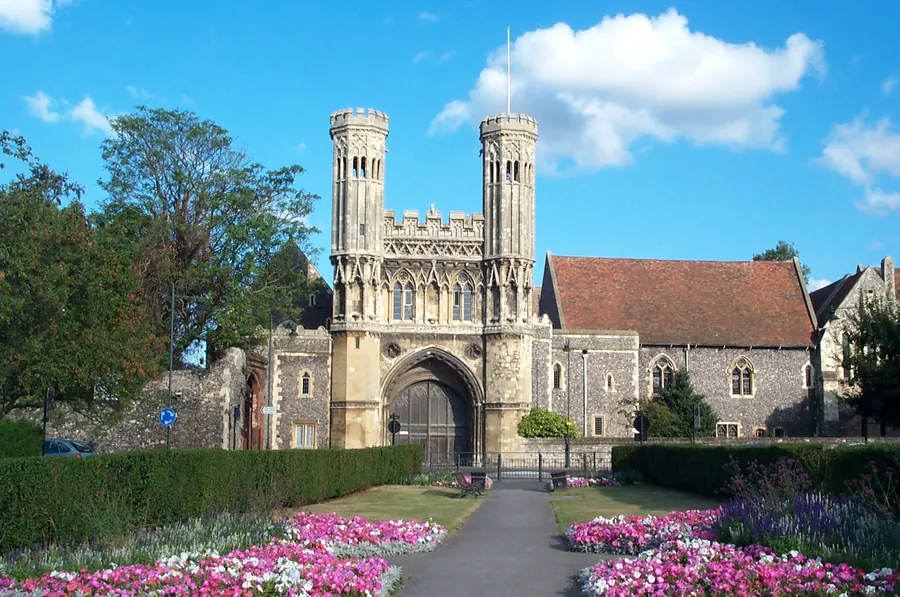
East of the walls, on Longport, stand the ruins of St Augustine’s Abbey, founded in 598 and a monastery until its dissolution in 1538. Reviewers are level-headed about it: “Ok most of it is just ruins, but the history makes it worth a visit, even if like me you are not religious,” one wrote in May 2026. Canterbury West station is 0.6 km from the centre and Canterbury East 0.7 km, both Southeastern, with direct trains from London St Pancras International into the West and on to Dover from the East; the bus station is 0.4 km out.
Of the 200 Google reviews collected here for the city’s main sights and operators, fourteen mention crowds, busyness or parking, and not one mentions a queue: the pressure is in the streets and the riverside gardens rather than at ticket desks. A visitor in October 2025 made the general point: “Canterbury itself feels quite compact and can get crowded”. Westgate Gardens, on 4.7 from 4,825 Google reviews, produces the sharpest disagreement. “I came over in early March, not during the busiest of times. However, it was extremely packed here,” one wrote in March 2025; a visitor in December 2025, describing an April trip that reached the gardens first thing, found “it wasn’t crowded, so we could take our time enjoying everything.”
Driving in is the real friction. City-centre car parks are unloved — Whitefriars runs 3.6 from 597 Google reviews, Watling Street 2.9 from 186 — and the alternative is park and ride at New Dover Road, Sturry Road and Wincheap, of which only the first two run on Sundays. A visitor in July 2024 found that “if you are visiting from overseas it’s impossible to pay for the parking if you do not have a UK phone”.
Half a day is the cathedral and the walk to it, and nothing else. A visitor in July 2026 advised getting “ready for at least 3 hours for the Canterbury cathedral - interiors and exteriors”.
A day covers the walled city. The walking day published here leaves the car at Whitefriars and runs Dane John Gardens, Westgate Gardens, coffee on St Dunstan’s Street, the Westgate Towers, lunch on Pound Lane, the cathedral and St Augustine’s Abbey: 2.6 km, about 45 minutes on foot spread across the day, plus about 15 minutes back to the car. With small children it shortens to the two gardens, roughly 15 minutes’ walking; in rain it collapses to the indoor stops. The Roman Museum took one visitor in April 2026 an hour to an hour and a half; the Canterbury Tales Immersive Experience rather less — “we were in there for 30/40 mins”, wrote a visitor in May 2026 who thought it expensive for that.
Two nights buys the river and the country. Punting and the guided river tours are what reviewers single out most, and they fill: “I did not have the chance to take the tour, as it was fully booked,” one wrote in May 2026.
Distances are straight-line from the centre. Chartham is 3.1 km up the Stour, on the Great Stour Way and with its own unstaffed station; Wickhambreaux, 7.3 km east, is a medieval green with a 13th-century church, and Howletts Wild Animal Park is at Bekesbourne, on 4.5 from 5,330 Google reviews.
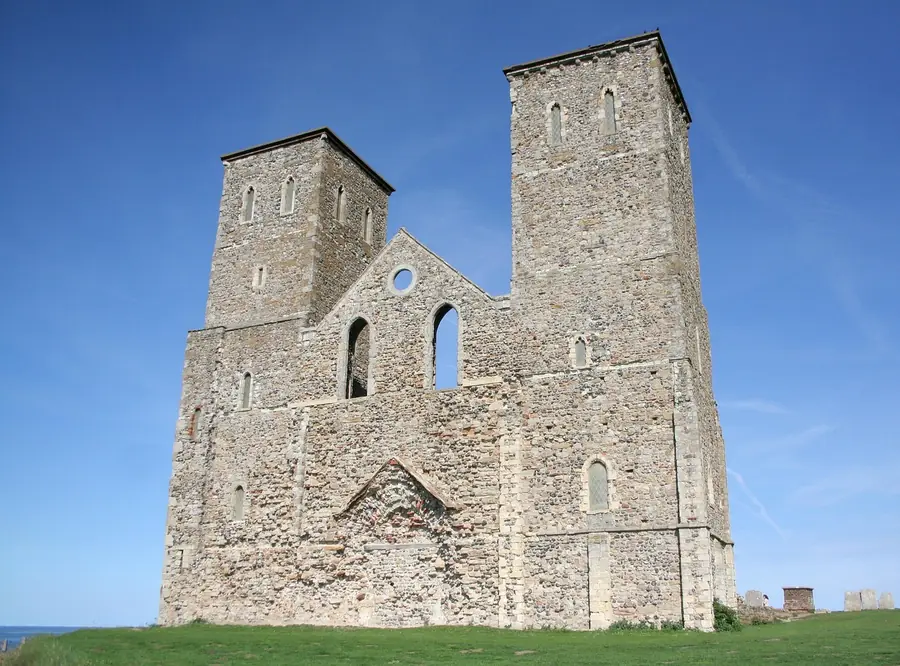
The coast is the usual second day. Whitstable is 9.8 km straight-line, five miles (eight kilometres) north by Wikipedia’s reckoning; the Canterbury and Whitstable Railway of 1830 is now the Crab and Winkle Way, about seven miles of almost traffic-free cycling. The town had 32,196 people in 2021 and holds an oyster festival in summer. Herne Bay is 10.7 km, 6 miles (10 km) north, and its seafront clock tower of 1837 was the world’s first freestanding purpose-built one. Reculver, 13.8 km, has the twin towers of a medieval church on a Roman fort; a visitor in July 2026 was straight about it — “there isnt much to see, old ruined towers, small pebble beach and a big expanse of sea” — before calling it one of the most peaceful places they had been.
Inland, Faversham is 13.6 km, Wye 14.6 km and Aylesham 10.4 km; Ashford, 20.9 km along the A28, has the Eurostar station. Walking country is the Kent Downs, the eastern half of the North Downs; the birdwatching is at Stodmarsh and Blean Woods, where by one April 2026 account it is the car park that gets busy at weekends.
The most-visited sights in and around Canterbury.
Canterbury Cathedral is the cathedral of the archbishop of Canterbury, the spiritual leader of the Church of England and symbolic leader of the…
The Kent Downs is an Area of Outstanding Natural Beauty (AONB) in Kent, England.
Howletts Wild Animal Park in the parish of Bekesbourne, near Canterbury in Kent, was established as a private zoo in 1957 by John Aspinall.
St Augustine's Abbey was a Benedictine monastery in Canterbury, Kent, England.
The top sights on one map — and a sensible order to see them in.
Attractions, prices and availability in Canterbury
These come from GetYourGuide's booking widget, which sets their cookies in your browser. Consent to load it and see the attractions and prices.
Canterbury is easily accessible from London by following the M2 south and east until it merges with the A2, linking Canterbury with Chatham, Gillingham and Sittingbourne to the north, and the port of Dover to the south.
Canterbury is served by two railway stations. Fare and timetable information are available from Southeastern, +44 345 748 4950:
National Express operate coaches to Canterbury from London Victoria Coach Station and also from Dover.
Canterbury does not have its own airport. The nearest major international airports to Canterbury are London Gatwick about away and London Heathrow, about away.
Written from what we found on the ground.
 Canterbury Cathedral: A Visitor's Guide What to see in Canterbury Cathedral — the martyrdom, the crypt, the medieval glass, the Black Prince's tomb and Bell Harry — plus tickets, timing and the tower tours. Read the guide →
 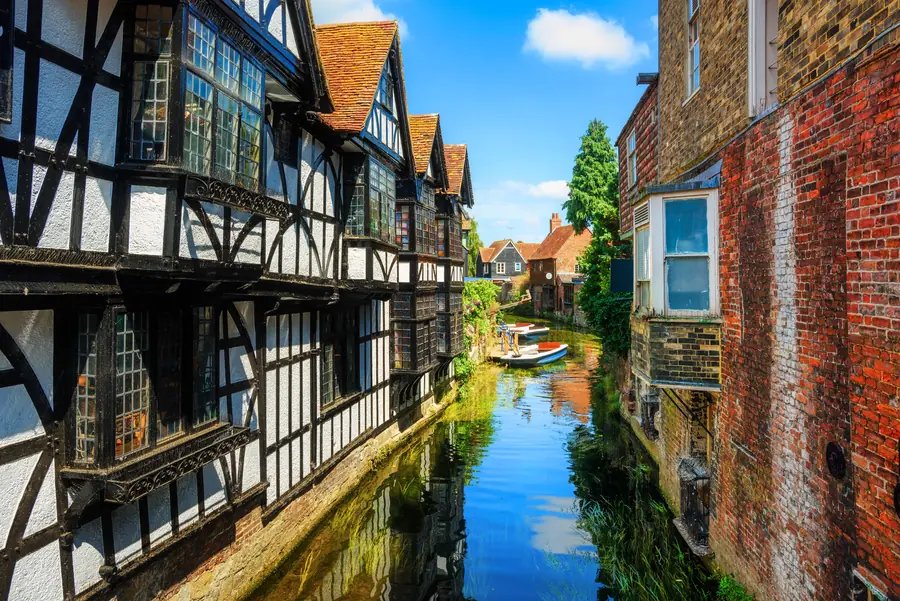 Day Trips From Canterbury: The Best of East Kent Where to go from Canterbury — Whitstable, Herne Bay and Reculver, Dover and the White Cliffs, Margate and Broadstairs, Sandwich, Faversham, Leeds Castle and the Kent Downs. Read the guide → Punting on the Stour: River Trips in Canterbury How punting works in Canterbury — the operators, the route past the Old Weavers House and Greyfriars, self-punting versus a guide, prices, timing and the river trips outside the city. Read the guide →
 Guides, ideas and planning help for your visit, from the editors.
Read the guides