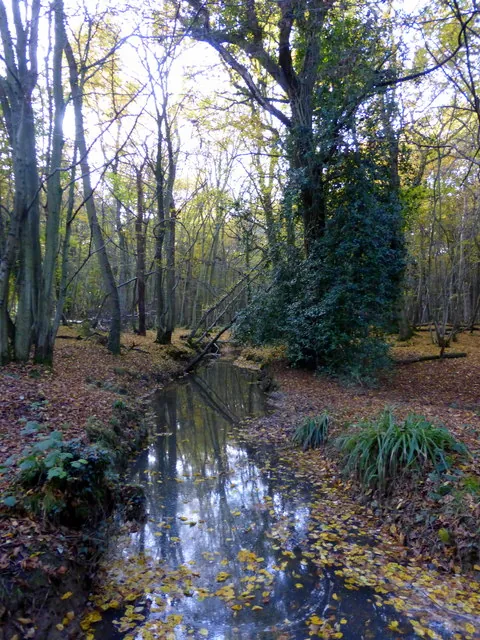
The Blean is a block of woodland covering some eleven square miles on the rising ground north of Canterbury, and it is one of the largest surviving areas of ancient broadleaf woodland in England.
The RSPB reserve within it, at Rough Common five kilometres from the city, is the part most visitors use — a national nature reserve with waymarked trails, a car park and a network of rides through oak, sweet chestnut coppice, hornbeam and birch.
Ancient woodland — continuously wooded since at least 1600 — is rare in England, and blocks of this size are rarer still. The Blean survived because the soil is heavy London Clay, poor for arable farming, and because the wood was economically useful as coppice: sweet chestnut cut on rotation for hop poles, fencing and charcoal.
That coppicing is why the wildlife is what it is. Cutting on rotation creates a permanent patchwork of open glades, young growth and mature trees, which suits a set of species that closed high forest does not.
The heath fritillary is the reserve’s flagship — a small, scarce butterfly that is one of Britain’s most threatened, dependent on common cow-wheat which grows in the first years after coppicing. The Blean is one of its last strongholds and the woodland is actively cut to keep it going. It flies in June and early July.
Nightingales sing here in May, in the scrub and young coppice, and the Blean is among the better places in Kent to hear them.
Woodpeckers — all three British species — nuthatches, treecreepers, and in winter mixed flocks.
Bluebells in late April, and wood anemone and orchids in the rides.
Deer, and a rich invertebrate fauna in the dead wood.
The RSPB reserve at Rough Common has waymarked trails from the car park ranging from a short circuit of a couple of kilometres to a longer route of around ten. They are well signposted and the going is easy, though the clay is heavy after rain — this is not a wood for light shoes in winter.
Beyond the RSPB land, the wider Blean is crossed by the Crab and Winkle Way, the walking and cycling route from Canterbury to Whitstable along the trackbed of the world’s first regular passenger steam railway, opened in 1830. It runs eleven kilometres from the city to the coast, and the woodland section is the best part of it.
The reserve is large, quiet and lightly used away from the main trails, which is most of its appeal. It is also — as with any big wood — worth using the busier central routes if you are walking alone and would rather not be entirely on your own; some visitors have raised this, and it is a reasonable thing to factor in.
Free, with a car park at Rough Common that is free to RSPB members and charged for others.
Facilities: parking and information at the reserve entrance; no café or toilets on site. Canterbury is five kilometres away.
Access: the paths are unsurfaced woodland rides. One shorter trail is easier going; the rest are not accessible.
Dogs are welcome on the public routes but should be under close control — this is a nature reserve with ground-nesting birds.
Season: late April for bluebells, May for nightingales, June and early July for the heath fritillary, autumn for fungi.
By car: Rough Common, five kilometres north-west of Canterbury, signposted.
On foot or by bike: the Crab and Winkle Way from Canterbury runs straight through, about four kilometres to the reserve.
By bus: services to Rough Common from the city.
The whole woodland covers around eleven square miles; the RSPB reserve within it is the part with the waymarked trails.
A scarce butterfly, one of Britain’s most threatened, which depends on freshly coppiced woodland. The Blean is one of its strongholds and it flies in June and early July.
Late April, in the older woodland.
Yes. The car park at Rough Common is free to RSPB members and charged for others.
Yes — the Crab and Winkle Way runs from the city through the woods and on to Whitstable.